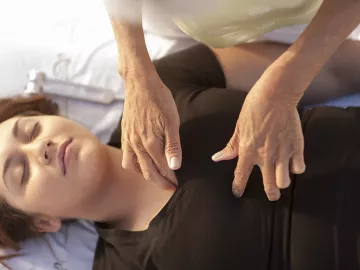
Context is powerful: Even light, mindful touch can significantly shift pain and proprioception, reminding us that how we work matters as much as what we do.
A growing body of research on the craniosacral rhythm (CSR) is working to validate what has been palpated for decades—the CSR is a distinct and measurable physiological rhythm that has given way to its own distinct therapeutic discipline.
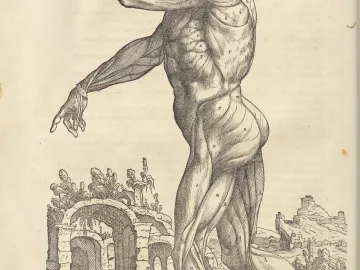
Reading the body remains a pseudoscience; yet, examining the mystery of body types through systems like Ayurveda or somatotyping can help practitioners approach each client in ways distinct to their constitution.
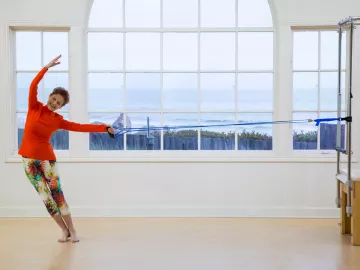
Rather than enforce physical symmetry, Aston Kinetics (which trains people in movement, bodywork, fitness, and ergonomics) seeks to recognize the asymmetries natural to a person’s body.
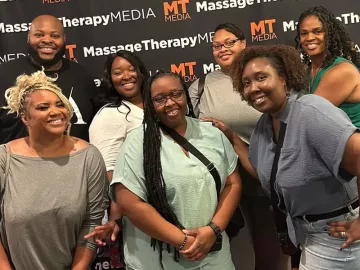
The first Black Massage Therapist Conference was held October 14 in Charlotte, North Carolina. The event was rich with support, learning, and encouragement, and ABMP was proud to be a sponsor in attendance.
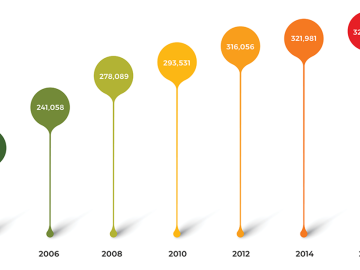
Despite the impact COVID-19 had on massage school enrollment, a survey from Associated Bodywork & Massage Professionals (ABMP) found that massage graduate numbers are on the rise.